
Health and wellness, parenting, nutrition, fitness
By Laura Crawford, Founder of Mama Bamboo
Becoming a parent changes everything—from your daily routine to how you view the future. For many new parents, it’s also the moment they begin to think more deeply about the planet their children will inherit. If you’re starting your parenting journey with an eco mindset then read on to see what things you can do to try and make a difference to the world your children grow up in.
A very wise person once said:
“We don’t need 20% of people to be 100% better. We need 100% of people to be 20% better.”
As a new parent, it can feel overwhelming trying to “do it all”—especially in those foggy, sleep-deprived early months. But when it comes to sustainability, you don’t need to be perfect. What really matters is making small, conscious choices that add up to a big difference. Parenting with an eco mindset is about simple swaps, smarter choices, and remembering that what’s good for the planet is often good for your baby too.
The Hidden Waste of Parenting
On average, each person in the UK produces over a tonne of waste every year, much of which could be recycled or composted. As a new parent, one of your biggest contributors to that waste will likely be disposable nappies and wipes. A single baby can use over 6,000 nappies before they’re potty trained—and most conventional nappies are made from plastic, chemicals, and synthetic materials that can take up to 500 years to decompose, sitting in landfills and releasing harmful chemicals and microplastics. Most are made from plastic-based materials, bleached pulp, and chemicals that aren’t just tough on the environment—they can also be harsh on your baby’s delicate skin.
So what are the options, some parents choose to use reusable nappies, a great solution but this isn’t everyone’s cup of tea, it is a real life choice to want to do this so if it doesn’t work for your family there are other ways to be more environmentally friendly with your nappy choices.
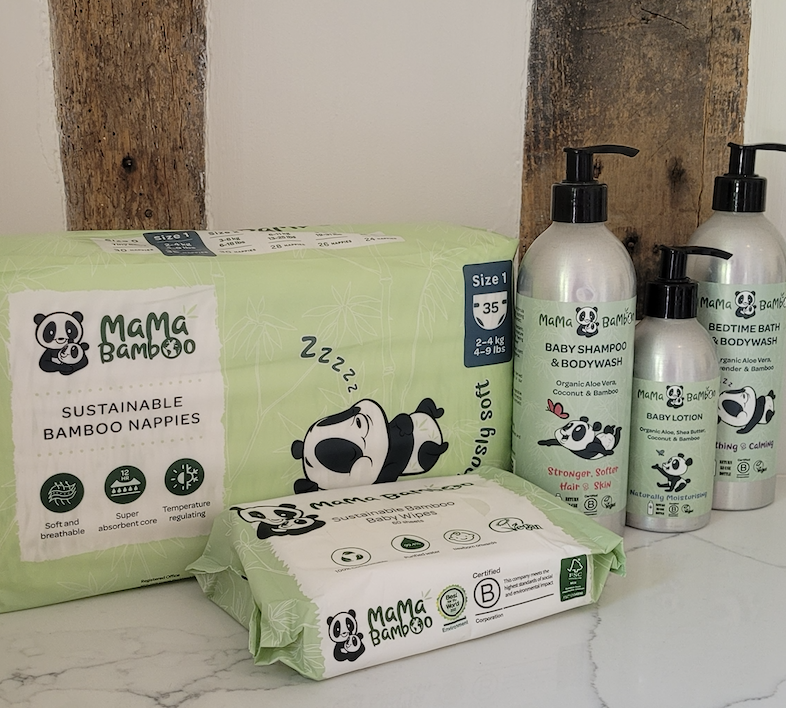
Sustainable nappies are a popular choice for the eco conscious parents, for example, bamboo nappies and wipes are not only as a better environmental option, but also as a gentler, more natural choice for your child.
Choosing eco-nappies and compostable wipes can help you significantly reduce your family’s waste footprint. But it’s not just about the environment—it’s also better for your baby.
Why Bamboo?
Bamboo is one of the most sustainable resources on the planet. It grows quickly without the need for pesticides or fertilisers, requires minimal water, and naturally regenerates after harvesting. Its fast growth and low impact make it a top choice for eco-conscious products.
When used in nappies and wipes, bamboo offers several benefits:
Beyond Nappies: Everyday Changes for a Zero-Waste Life
What else can eco-minded parents do to work towards a zero-waste lifestyle?
Here are some top tips:
Small Swaps, Big Impact
Raising a family doesn’t have to mean raising your carbon footprint. The truth is, babies don’t need much—just love, care, and a few essentials and most of those can be second hand! By making small daily swaps, you’re showing your children what it means to care for the planet—starting with their very first nappy change.
🌱 Final Thoughts: A Little Greener, A Lot Kinder
Sustainable parenting doesn’t mean sacrificing convenience or comfort—it means being intentional. Whether it’s swapping out your nappies, using a reusable water bottle, or buying secondhand baby grows, every small choice counts.
You don’t need to be perfect—just start somewhere.
All Life Postpartum members receive 20% off orders with Mama Bamboo. Start your free trial today.
Share:


